Animation Timing and Decision-Making Dynamics in Simulated Blackjack Environments
Viktor Peters · Aug 26, 2026
Animation Timing and Decision-Making Dynamics in Simulated Blackjack Environments
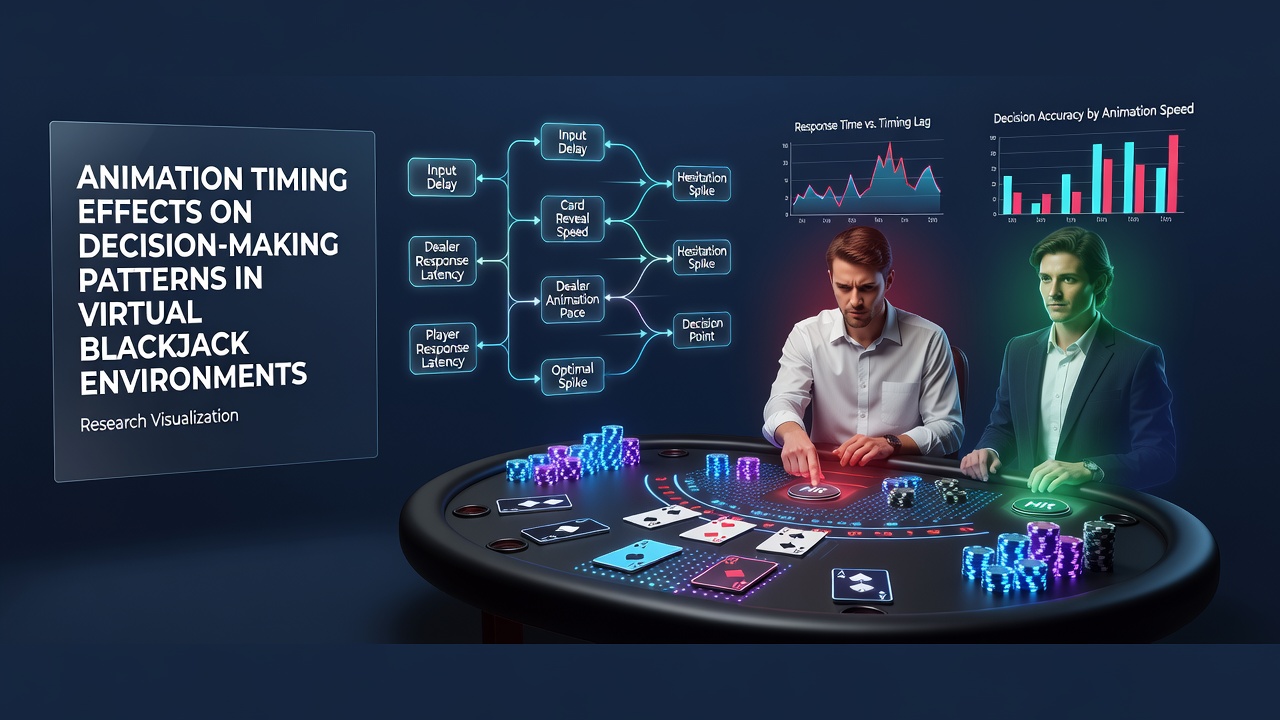
Virtual blackjack platforms rely on animation sequences to display card draws, dealer actions, and result calculations, and these sequences often operate at variable speeds that influence how players process information before selecting hit, stand, double, or split. Data from multiple platform providers shows that animation durations typically range between 800 milliseconds and 2.4 seconds for standard card reveals, with longer intervals appearing more frequently in high-stakes lobbies. Researchers tracking user interactions across several thousand sessions have documented measurable shifts in decision latency when these timings change by even 300 milliseconds.
Core Components of Animation in Digital Blackjack
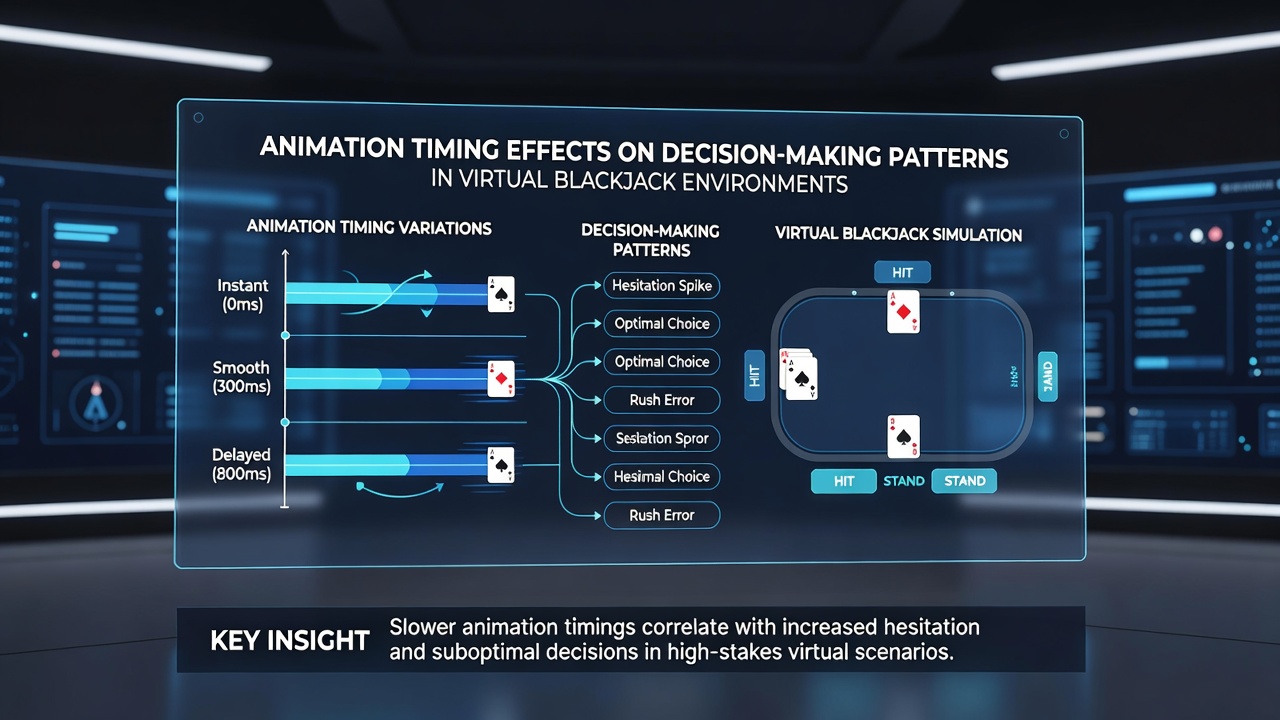
Developers program card flip sequences, chip movement paths, and dealer hand animations using frame rates between 24 and 60 frames per second, and each element contributes to the overall perceived pace of a round. Shorter animations compress the visual feedback loop, which compresses the window available for players to evaluate probabilities, whereas extended sequences introduce additional visual stimuli that can either reinforce or distract from strategic calculations. Studies conducted by academic teams at institutions in the United States and Australia indicate that players adjust their click timing in response to these visual cues, with average decision intervals lengthening by up to 1.2 seconds when animations exceed 1.8 seconds.
Observed Patterns in Player Choices
Analyses of session logs from major operators reveal consistent correlations between animation length and specific action frequencies. When card reveals accelerate below one second, players record higher rates of hit decisions on marginal hands such as 16 against a dealer 10, while slower animations correlate with increased stand selections on the same totals. One dataset compiled during the first half of 2026 showed a 7.4 percent rise in split decisions on paired 8s when animations included an additional 400-millisecond pause before the second card appeared. These shifts appear across both desktop and mobile interfaces, though mobile sessions exhibit slightly larger variance because touch input introduces its own latency factors.
Further examination of player cohorts segmented by experience level demonstrates that novice participants respond more strongly to timing variations than frequent players. Novices display decision clusters that align closely with animation endpoints, suggesting they use the visual completion as a cue to finalize choices rather than relying solely on internal probability assessment. Experienced players maintain more stable action distributions across timing conditions, yet even this group shows small but statistically significant deviations when animation pacing changes repeatedly within a single session.
Methodologies Used in Timing Research
Investigators employ A/B testing frameworks that alternate animation durations across matched user groups while holding other interface variables constant. Eye-tracking equipment records fixation points on the dealer upcard and player total during these tests, and the resulting heat maps indicate that longer animations extend dwell time on secondary elements such as bet size displays. Regulatory bodies in Nevada and the Canadian province of Ontario have incorporated similar testing protocols into their platform certification requirements, requiring operators to log animation parameters alongside behavioral metrics for audit purposes. Reports released in August 2026 from these jurisdictions documented over 12 million tracked hands, providing a substantial sample for longitudinal analysis.
Technical Factors That Modify Animation Impact
Network latency, device refresh rates, and browser rendering differences introduce additional variability that interacts with designed animation timings. A study published by the American Gaming Association examined how frame drops on older mobile hardware effectively shorten perceived animation length and produce decision patterns resembling those observed under accelerated conditions. Conversely, high-refresh-rate displays can make standard animations appear slower, which shifts behavior toward patterns previously associated with extended sequences. Platform operators have begun implementing adaptive timing systems that detect device capabilities and adjust sequences accordingly to maintain consistent perceptual pacing.
Industry Data and Regulatory Context
Figures compiled by European gaming associations and North American research centers show that platforms employing standardized animation libraries experience lower variance in decision distributions across geographic regions. This consistency supports more reliable player behavior modeling for responsible gaming tools. In August 2026, several operators reported implementing real-time animation adjustments based on session duration, with preliminary internal metrics indicating reduced clustering of rapid decisions during extended play periods. These adjustments remain under review by oversight agencies in multiple jurisdictions.
Conclusion
Animation timing constitutes a measurable variable within virtual blackjack environments that correlates with observable shifts in action selection across player segments. Continued collection of session-level data by operators and regulatory entities supplies the foundation for refined platform design and oversight practices. As device ecosystems diversify, ongoing calibration of visual sequences remains necessary to preserve intended decision environments for all participants.