Examining Correlations Between App Interface Colors and User Retention in Digital Gambling Environments
Quinn Günther · May 31, 2026
Examining Correlations Between App Interface Colors and User Retention in Digital Gambling Environments
App developers in digital gambling environments continue to analyze how interface colors influence user retention rates, with multiple studies tracking engagement metrics across platforms that feature slots, table games, and sports betting sections. Researchers have documented patterns where specific color palettes correlate with longer session durations and repeat logins, particularly when those palettes align with psychological responses observed in controlled testing environments.
Color Choices and Initial User Engagement
Design teams select dominant hues for navigation bars, button accents, and background gradients because data from app analytics shows these elements affect first-week retention numbers. Blue tones often appear in login screens and account dashboards since they connect with perceptions of stability according to findings compiled by the University of Nevada Reno Gaming Research Center. Red accents on promotional banners draw attention to time-limited offers, while green shades frequently mark winning animations and balance displays to reinforce positive associations during play sessions.
Platforms adjust saturation levels and contrast ratios based on A/B testing results collected over several months, and those adjustments show measurable shifts in daily active user figures. Observers note that darker themes with neon highlights tend to perform differently than bright white backgrounds paired with pastel elements, especially when users access apps during evening hours across various time zones.
Research Data on Retention Metrics
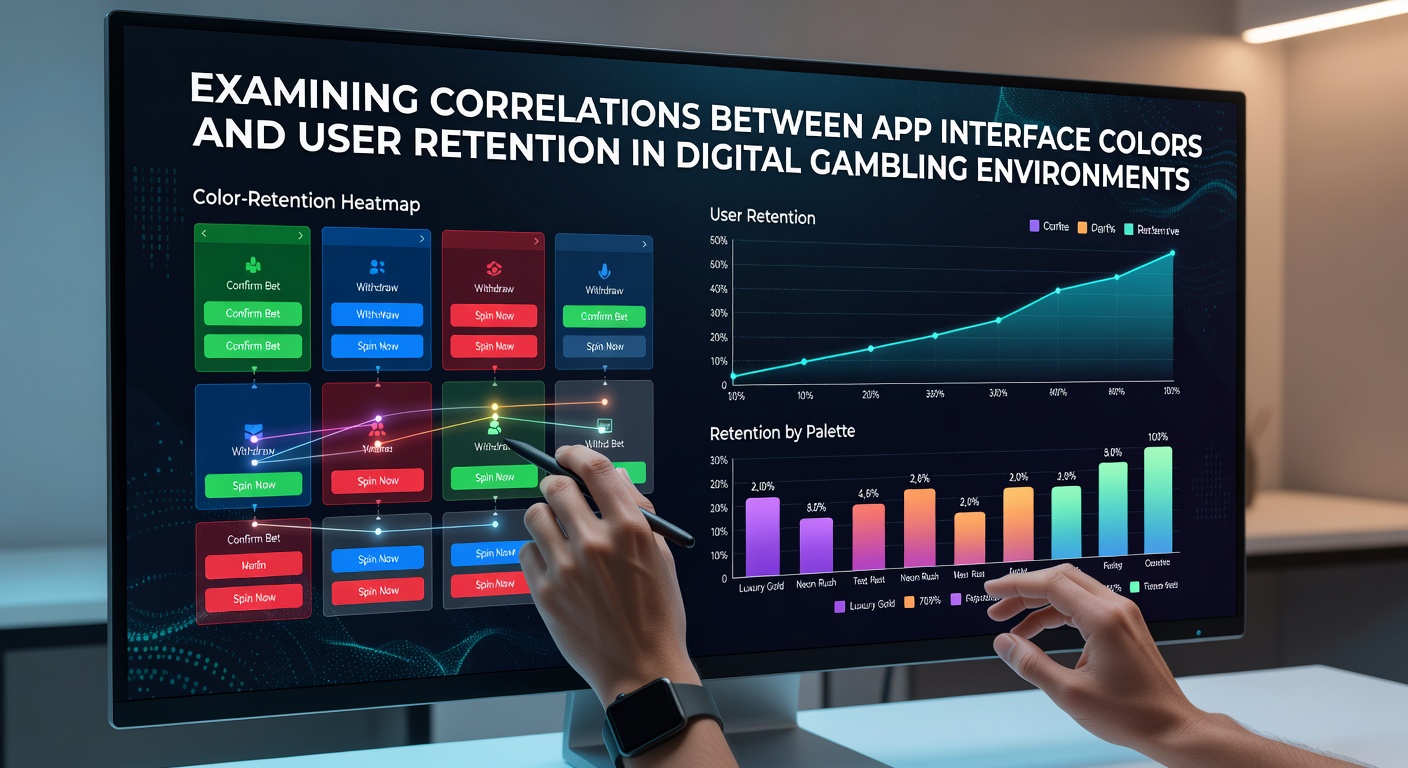
Analyses of retention curves reveal that apps incorporating cool color families maintain higher percentages of users returning after 30 days compared with those relying primarily on warm palettes. Figures released in May 2026 from industry tracking services indicated a 12 percent average lift in seven-day retention when interfaces used muted blues and grays alongside strategic orange call-to-action buttons. Those same reports compared European and North American operators, finding similar directional trends despite regional differences in game offerings.
Academic teams have examined eye-tracking data alongside behavioral logs to map where users focus during onboarding sequences, and results indicate that color transitions between screens influence how quickly individuals complete registration steps. When transitions use complementary shades rather than abrupt changes, completion rates improve and subsequent drop-off decreases. One dataset compiled by researchers at the Australian National University linked interface consistency in color usage to a reduction in churn rates among users aged 25 to 40.

Implementation Across Different Gambling Vertical
Slot-focused applications often employ vibrant jewel tones to highlight reel symbols and bonus rounds, while poker clients lean toward darker greens and browns to evoke traditional felt surfaces. Sports betting interfaces frequently combine team colors with neutral backgrounds to accommodate live event updates without overwhelming the display. Data indicates that vertical-specific color strategies produce stronger retention outcomes than generic palettes applied uniformly across all game types.
Operators monitor heat maps generated from user interactions to refine accent placements, and adjustments made after initial launches have produced incremental gains in monthly active user counts. Platforms serving multiple jurisdictions adapt color schemes to meet accessibility standards while preserving brand recognition, which helps sustain engagement among users who switch between desktop and mobile versions.
External Factors Influencing Outcomes
Device screen calibration, ambient lighting conditions, and individual color vision variations introduce additional variables into retention calculations. Developers incorporate adaptive brightness features and high-contrast modes to address these factors, and testing shows these adaptations help retain users who might otherwise disengage due to visual strain. Regulatory bodies in several regions, including the Nevada Gaming Control Board, require clear visibility of balance and bet information, which influences how color is applied to critical interface components.
Seasonal campaigns sometimes introduce temporary color overlays tied to holidays or major sporting events, and analytics teams track whether these changes extend session lengths beyond baseline levels. Retention lifts appear more pronounced when overlays maintain sufficient contrast with core navigation elements rather than replacing them entirely.
Conclusion
Correlations between interface colors and user retention continue to shape design decisions in digital gambling environments as operators collect larger datasets and refine testing protocols. Ongoing research from academic institutions and industry groups supplies additional context for how specific hues interact with engagement patterns across different user segments. Platforms that systematically evaluate color performance alongside other variables maintain more stable retention figures over time, while those that treat color as a static element see greater variability in return rates.