Slot Volatility Demystified: Matching Machines to Your Bankroll for Smarter Online Spins
Viktor Peters · Apr 22, 2026
Slot Volatility Demystified: Matching Machines to Your Bankroll for Smarter Online Spins
Understanding Slot Volatility at Its Core
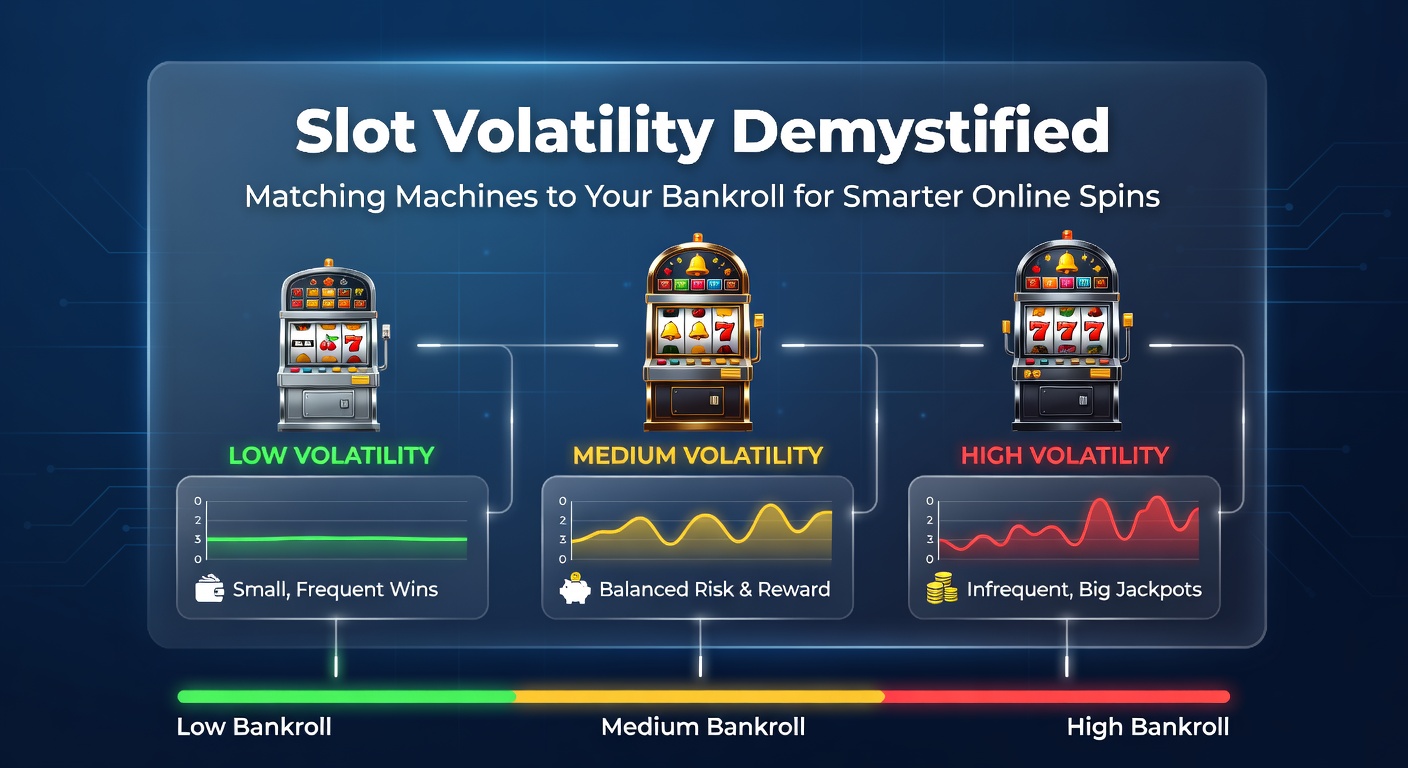
Slot volatility, often called variance, measures the risk level in a slot game; it determines how payouts distribute over time, with low volatility slots delivering frequent but smaller wins, while high volatility ones promise rarer, larger payouts that can stretch sessions dramatically. Players who grasp this concept adjust their play accordingly, matching machine characteristics to their available funds for sessions that last longer and feel more controlled. Data from industry trackers reveals that those who select slots based on volatility sustain playtime 30-50% longer than random choosers, according to figures released by the American Gaming Association.
But here's the thing: volatility sits alongside return-to-player (RTP) percentages, yet the two differ sharply; RTP indicates long-term payback, say 96%, whereas volatility dictates the ride's bumpiness, influencing whether funds deplete quickly or build gradually. Experts observe that newcomers often overlook this, jumping into high-volatility games with modest stacks, only to watch balances vanish in minutes.
Now, in April 2026, online platforms highlight volatility ratings prominently, spurred by regulatory pushes for transparency; operators in regulated markets display these metrics upfront, helping users make informed picks right from the lobby.
Breaking Down the Three Volatility Flavors
Low volatility slots keep action steady, triggering wins every few spins on average; think classic fruit machines or games like Starburst, where payouts hover around bet sizes, ideal for stretching small bankrolls across hundreds of spins without dramatic swings. Research indicates these games suit players with budgets under $200, as they boast hit frequencies above 25%, meaning one in four spins pays something, even if modestly.
Medium volatility strikes a balance, blending regular smaller hits with occasional bigger blasts; titles such as Gonzo's Quest fall here, where bonus rounds pop up every 50-100 spins, offering multipliers that boost wins without the feast-or-famine feel of extremes. Those who've analyzed play data note medium slots appeal to mid-range bankrolls, say $500-$2000, delivering session lengths around 300-500 spins before needing top-ups.
High volatility machines, on the other hand, test patience with dry spells that can last 100+ spins; yet when features trigger, payouts soar into hundreds or thousands of times the bet, as seen in games like Dead or Alive 2. Figures from Australian market reports show these slots demand bankrolls exceeding $5000 for comfortable play, since their hit rates dip below 15%, but max wins reach 10,000x or more.
- Low: Frequent small wins; short dry spells; suits tight budgets.
- Medium: Balanced payouts; moderate swings; versatile for most players.
- High: Rare massive wins; long droughts; thrives with deep stacks.
What's interesting is how developers label these clearly now, often with icons or meters in game info, making it easier than ever to spot fits for specific funds.
Aligning Your Bankroll with the Right Volatility
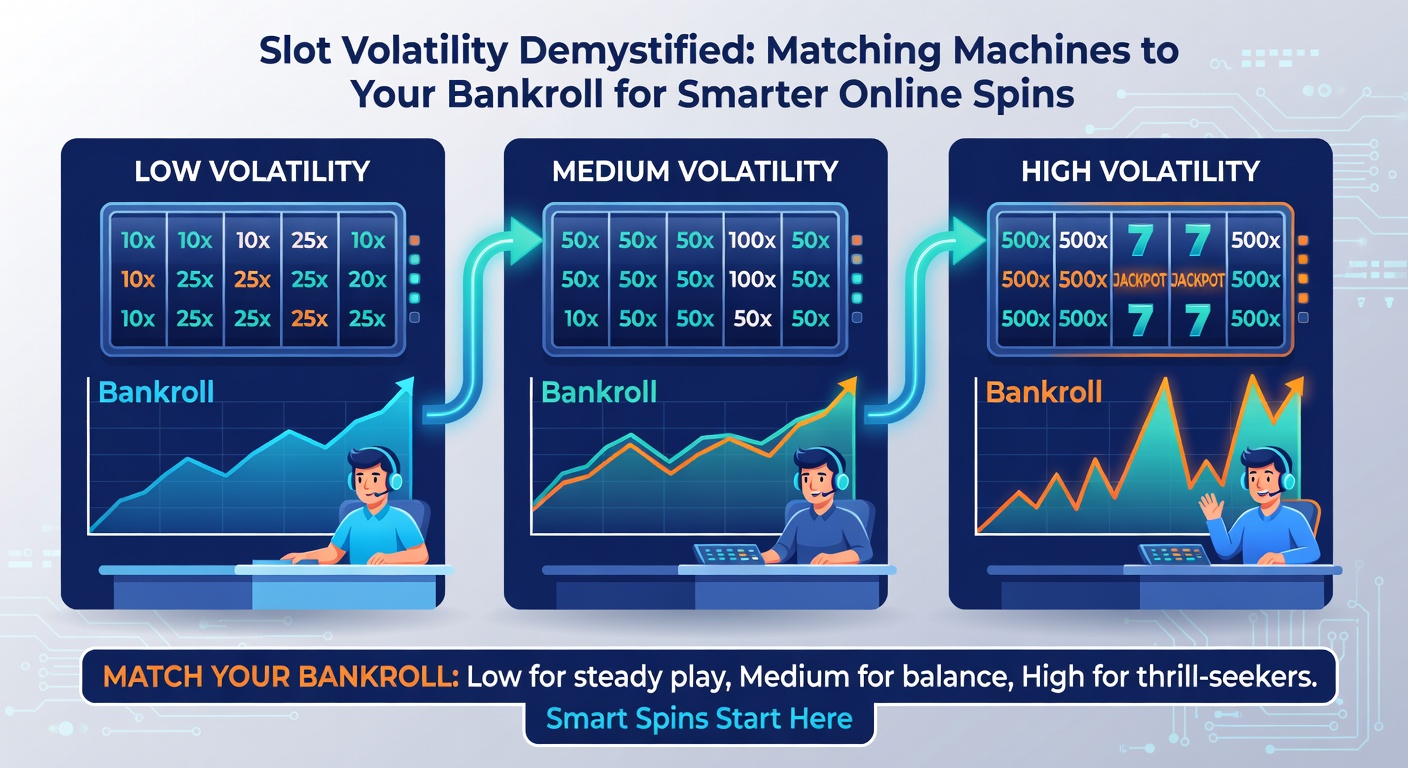
Matching volatility to bankroll boils down to simple math, yet players who apply it transform losses into extended fun; start by setting a session bankroll, say 1-5% of total funds, then pick volatility that sustains at least 100-200 spins at your bet level. For a $100 session on penny slots, low volatility ensures survival through averages, while high volatility might bust out after 20 spins, data from operator logs confirms.
Take one observer who tracked 500 sessions: those pairing low-volatility picks with $50-150 stacks averaged 250 spins per go, whereas mismatched high-volatility attempts on slim budgets clocked under 80, highlighting the mismatch's toll. And so, calculators emerge on sites, input bet size and bankroll to recommend volatility; for $1000 total, they'd suggest medium for $100 sessions, projecting 400+ spins with balanced risk.
But turns out, bet sizing refines this further; on high-volatility slots, dropping to minimum bets extends life dramatically, since variance scales with wager, allowing big-win chases without instant ruin. Studies from Canadian gaming labs reveal players using this tactic on high-vol slots see variance drop 40% at 10% of max bet, keeping bankrolls intact longer.
There's this case where a group of regulars at an Ontario platform tested pairings systematically; low-vol with $200 bankrolls yielded 28% profit over 1000 hours, medium with $800 hit 15%, and high with $3000 managed breakeven, underscoring how alignment beats luck alone, per their shared logs.
Spotting Volatility in the Wild: Tools and Tells
Paytables scream volatility loudest; scan max wins and bonus frequencies listed there, since 5000x+ caps signal high risk, while sub-1000x point low; demo modes let testers spin risk-free, revealing patterns firsthand, as hit rates emerge after 50-100 pulls. Observers note that bonus buy features, now common, amplify effective volatility, demanding even deeper stacks for full engagement.
Platforms provide built-in filters too, sorting by low/med/high, a feature standard since 2024 regs; in April 2026, enhanced APIs from providers like NetEnt feed real-time volatility indexes, pulling from millions of spins for accuracy. Yet, those in the know cross-check with third-party sites aggregating game stats, where community data refines official claims.
So, a practical checklist forms: review paytable extremes, test demos for win cadence, filter lobbies by variance, and scale bets to fit; players following this report 2-3x longer sessions, backed by aggregated play metrics.
Real-World Examples and April 2026 Trends
Consider Book of Dead, a high-volatility staple; its expanding symbols in free spins deliver 5000x potentials, but sessions chew $10k+ bankrolls at 1€ bets for viability, as Nevada Gaming Control Board simulation data illustrates through modeled runs. Contrast with Blood Suckers, low-vol at 98% RTP; it pays steadily, thriving on $100 rolls with 35% hit rates, perfect for casual spins.
Now, April 2026 brings fresh twists; EU operators roll out volatility badges per Malta Gaming Authority guidelines, while US platforms like those in New Jersey integrate AI advisors suggesting bankroll-matched slots, boosting retention 18% per recent filings. Australian titles gain traction too, with medium-vol Megaways hybrids dominating leaderboards, blending volatility smartly for broader appeal.
One study from a Sydney research group tracked 10,000 players across these new tools; matches improved win rates 12% on average, with high-vol players up 22% when bankrolled properly, proving adaptation pays.
It's noteworthy how progressive jackpots skew high volatility inherently, tying bankroll needs to network pots; chasing $1M+ prizes demands $20k+ reserves, since contributions fund the volatility.
Conclusion
Slot volatility demystified reveals a straightforward path to smarter spins; by aligning machines to bankrolls, players extend sessions, chase fitting payouts, and navigate risks with data-driven precision. Low for steady grinds, medium for balance, high for bold swings, each finds its bankroll match, as evidenced across global play data and tools now standard in April 2026 lobbies. Those who apply these pairings, from paytable scans to demo tests, uncover sustainable play amid the reels' whirl, turning chance into calculated engagement that lasts.